
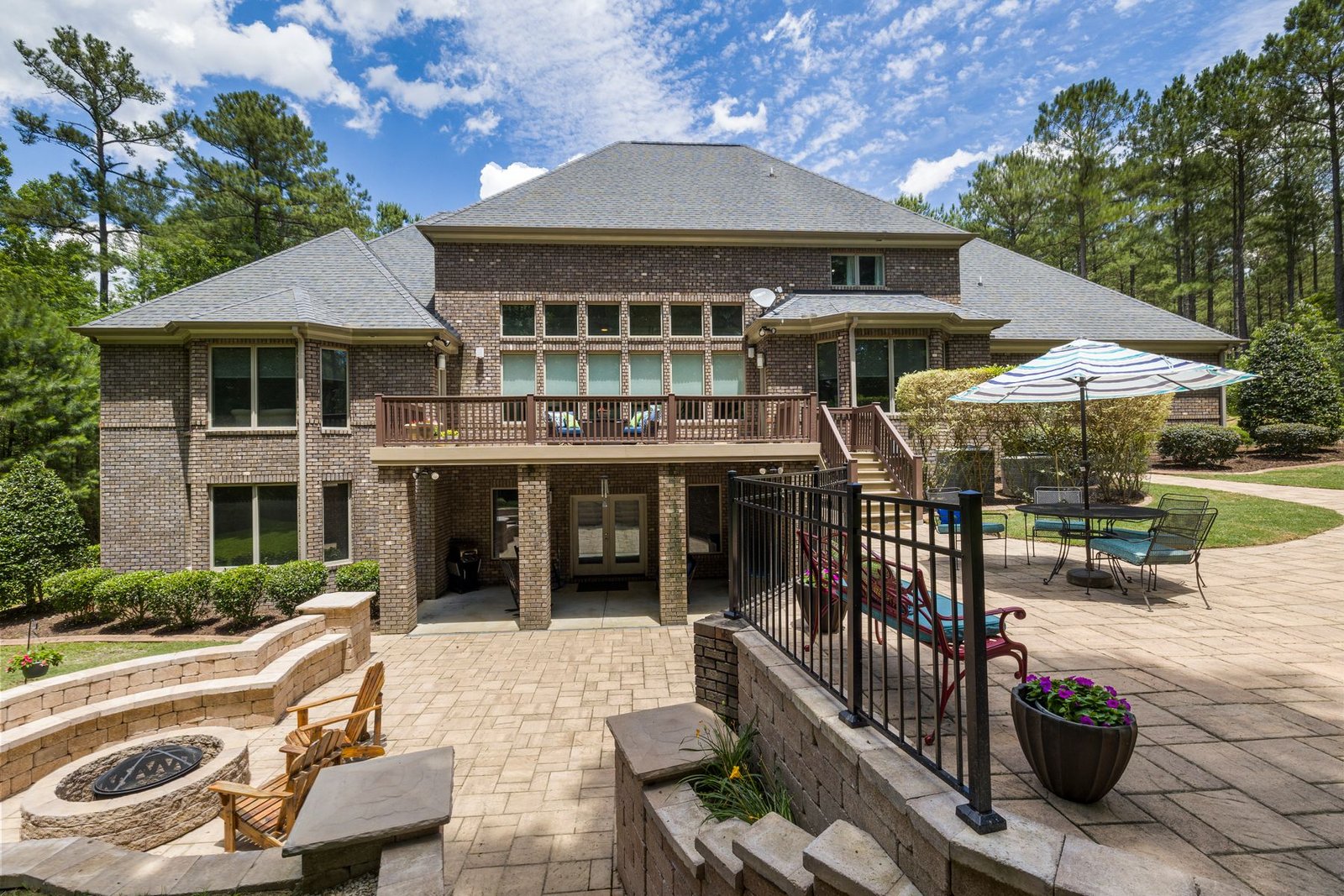
A paver patio is the most expensive thing most homeowners will have done to their yard, and almost every failure we get called out to look at comes down to the same thing. Not the pavers. The base underneath them.
Capstone Landscapes builds patios, walkways, driveways, and retaining walls across Wake Forest and northern Wake County. Rick Linder has been in the landscaping business more than 25 years. Call or text (919) 671-7296 for a free consultation.
Why patios fail on Wake County clay
Red Piedmont clay expands when it’s wet and shrinks when it dries. Build directly on it and the ground under your patio moves through every season, which is how you end up with sunken spots, lifted edges, and pavers that no longer sit flat three years in.
The fix is excavating deep enough and building a proper compacted aggregate base, in lifts, compacting each one. That base is most of the labor and most of the material on the job, and it’s the part you never see. It’s also the first thing that gets cut when somebody quotes a patio well below everyone else.
Drainage is the other half of it. Water has to get off the surface and out from under the base, which means building in the right fall away from the house and, on some lots, drainage under the patio itself. A patio that traps water against your foundation is a worse problem than no patio.
What we build
- Paver patios, from a simple sitting area to a full outdoor living space with a fire pit and seat walls
- Walkways and front entries
- Paver driveways and aprons
- Retaining walls, both structural and decorative, for the sloped lots common around here
- Steps and grade transitions
- Landscape beds, planting, and lighting to finish the space
We’ll help you choose materials that balance how it looks, how it holds up, and what you want to spend. There’s a wide range in paver quality and the cheapest option is rarely the best value over twenty years.
Pavers or poured concrete
Concrete is cheaper up front and it’s a fine choice for a plain slab. What it does on clay soil is crack, because a slab is one rigid piece and the ground under it moves. When it cracks, you live with it or you tear it out.
Pavers are individual units over a flexible base, so ground movement gets absorbed across thousands of joints instead of cracking one slab. If a section ever settles, you lift those pavers, correct the base, and put the same pavers back. You can do that twenty years later.
Pavers cost more. On a patio you plan to keep, they’re usually the better long-term call around here.
Retaining walls
Plenty of lots in this area have grade to deal with, and a wall turns an unusable slope into flat, usable yard.
A retaining wall is holding back tons of soil, and what makes it stand is drainage and base prep, not the blocks. Water building up behind a wall is what pushes it out, so gravel backfill, drain pipe behind the wall, and proper base and setback matter far more than the face you see. Walls that lean or bulge failed because water had nowhere to go.
Taller walls carry engineering and permitting requirements. We’ll tell you where your project lands and what it needs.
How a project runs
We come look at the space, talk about how you actually want to use it, and take measurements. Then a written quote covering materials, layout, and scope. Once you’re happy with the plan we schedule the build.
Most patios run a few days to a couple of weeks depending on size and access. We keep the site tidy, we protect the lawn where equipment has to cross, and we repair what we disturb.
Get a free consultation
Call or text (919) 671-7296 or email capstonelandscaping@gmail.com. Estimates and consultations are free with no obligation.
Serving Wake Forest, Rolesville, North Raleigh, Youngsville, Wendell, Zebulon, Knightdale, and Garner.
Common questions
How long does a paver patio last?
Decades, if the base is right. The pavers themselves outlast most of us. Everything depends on what’s underneath.
Do weeds grow in the joints?
Polymeric sand in the joints stops most of it. What does show up is usually seed blown onto the surface rather than anything growing up from below, and it comes out easily.
What maintenance is there?
Sweep it, rinse it, and expect to refresh the joint sand every several years. Sealing is optional and mostly about appearance.
When can you build?
Hardscape can go in nearly year round here. Fall and winter are often our most available stretch, and the ground conditions are usually fine.
Can you fix a patio somebody else built?
Often, yes. If the base was built correctly and it’s just settled in one area, that’s a repair. If the base was never there, it’s a rebuild, and we’ll tell you straight which one you have.